Didactic Curriculum
Our rich and innovative curriculum features multiple daily conferences covering all of our subspecialties, simulation-based training, and an evidence-based medicine course focusing on research and trials. Residents also have the chance to interact with all of the faculty at our weekly department-wide case discussions and grand rounds. Grand Rounds speakers are expert scientists and clinicians from all over the world who speak about cutting-edge work.
Curriculum Highlights
Clinical Neurophysiology Rotation
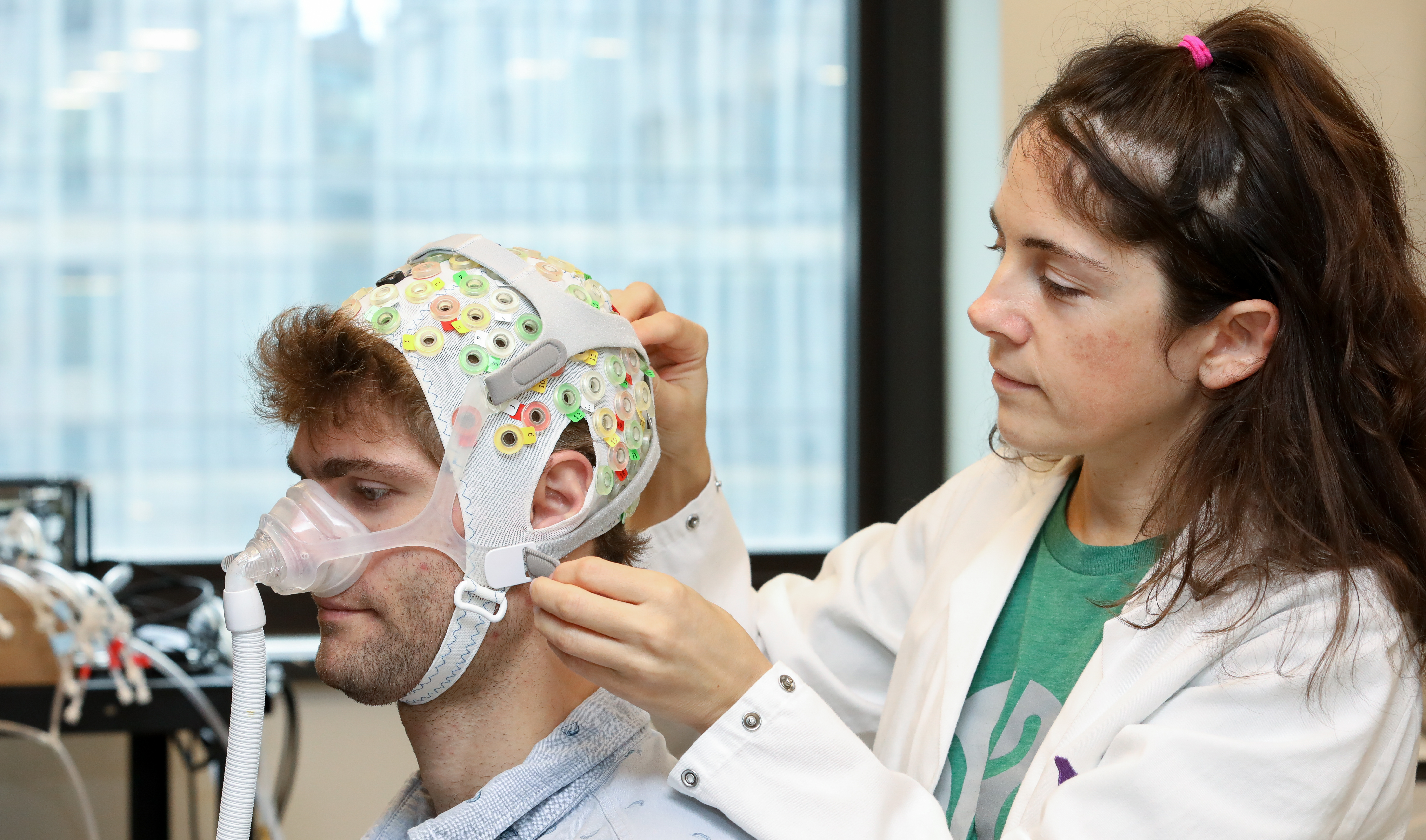
This rotation is designed as a one-month didactic introduction to clinical neurophysiology. The rotation is attended by the entire PGY-3 class in September each year. During this course, residents have no other clinical responsibilities other than their outpatient continuity clinic. The curriculum consists of didactic lectures in the morning and workshops in the afternoon (such as EEG reading, EMG interpretation and botulinum toxin injection). The rotation is directed by Yara Mikhaeil-Demo, MD, and provides the foundation for future training in EEG, EMG, sleep medicine and other electro-diagnostic based areas of neurology.Evidence-Based Medicine Curriculum
We have introduced a formal curriculum that covers the foundation of clinical research and clinical trials. The course is directed by Danny Bega, MD, our program director. The course is required for the PGY-3 residents and consists of lectures across five weeks, covering topics on clinical trials design, introduction to biostatistics and epidemiology, and a foundation for residents to better interpret existing literature. Residents also find this is a valuable course in providing background for their own research projects.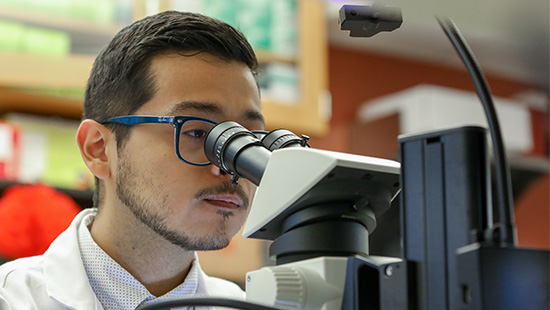
July Curriculum & Boot Camp
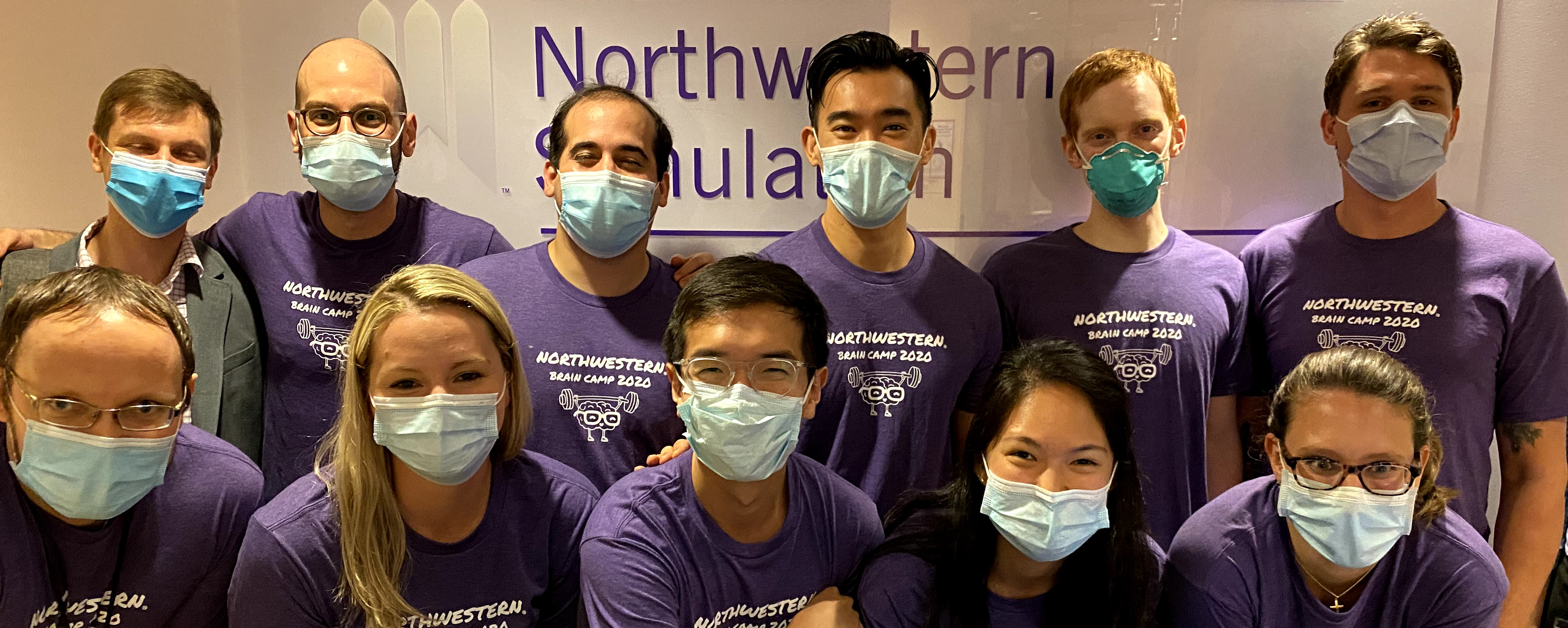
New PGY-2s are quickly brought up to speed with a review of neuroanatomy and detailed training on the neurological exam by expert clinicians. The July lecture series consists of neuro-emergencies and common ER consults. We also have an interactive boot camp to train new residents on managing stroke and ICH codes and status epilepticus as well as performing ophthalmoscopy and lumbar punctures.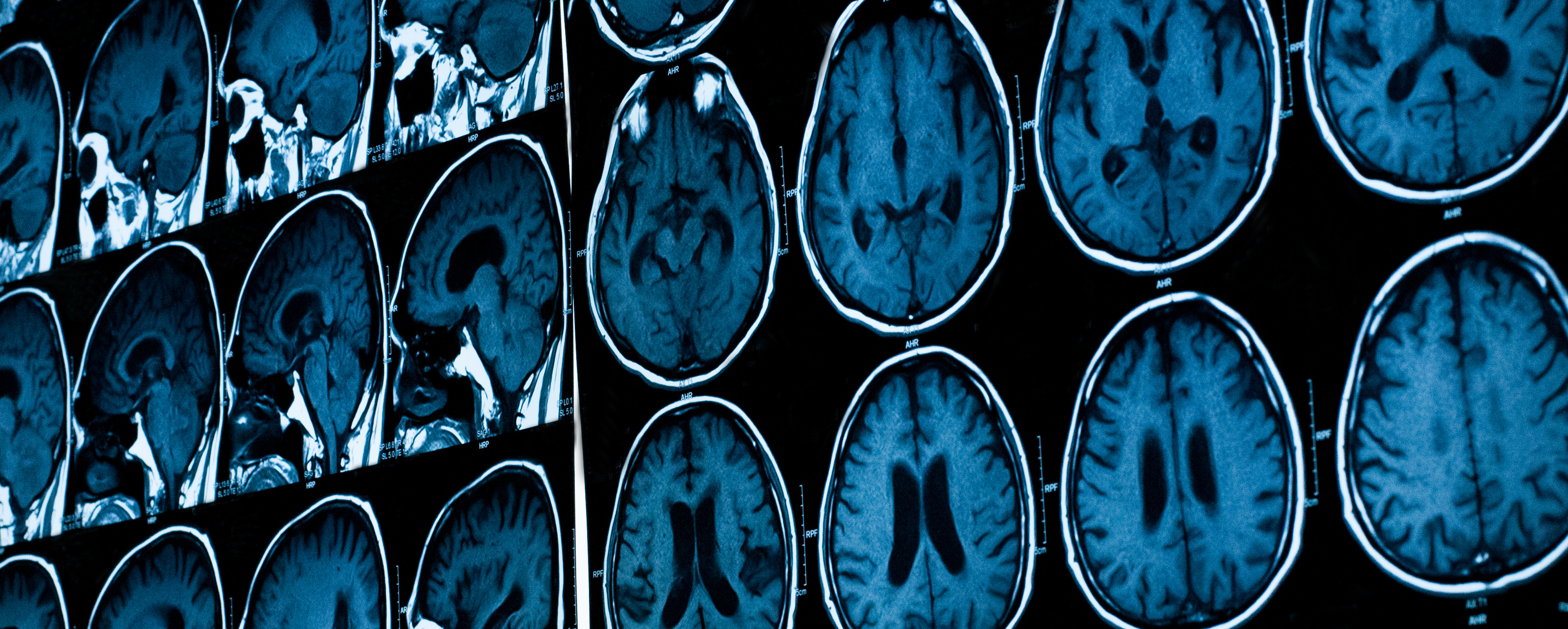
Neuroanatomy
Our residents spend 1 hour most Friday mornings learning neuroanatomy with Dr. Nicholas Hać. Residents prepare and teach key concepts to one another in addition to learning from content experts who provide advanced clinical insights and discuss how anatomical principles influence diagnosis, imaging interpretation, and patient management. Residents also receive neuroanatomy text books.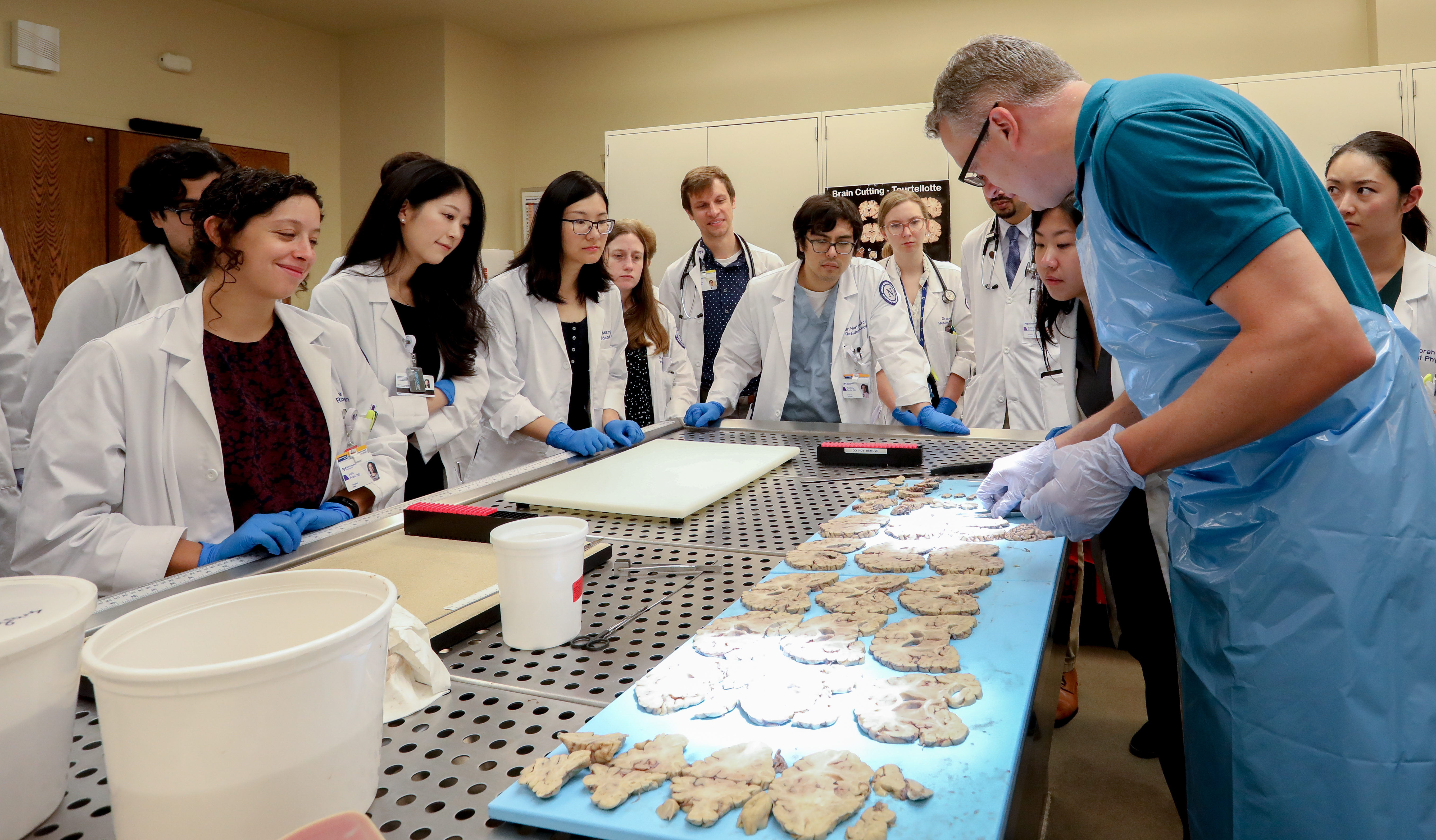
Teaching Conferences
Teaching conferences are held twice daily and feature content including basic science and neuroanatomy courses, journal clubs, neuroradiology lectures and brain-cutting workshops. These conferences provide structured learning opportunities for residents and fellows. Faculty from other specialties are also invited to provide expert opinions and insights from their own disciplines on complex cases. We also make use of our simulation laboratories to take teaching out of the traditional classroom.Quality Improvement
All residents are members of either the hospital general neurology quality committee or the stroke neurology quality committee during their PGY-3 or PGY-4 year. Each resident also participates in our monthly morbidity and mortality conference and prepares this conference during their senior block. A quality improvement curriculum has been developed to teach important principles of QI to all residents involved in our neurology resident program. Opportunities to become involved in QI projects or research are available to interested residents.
Simulation-Based Education
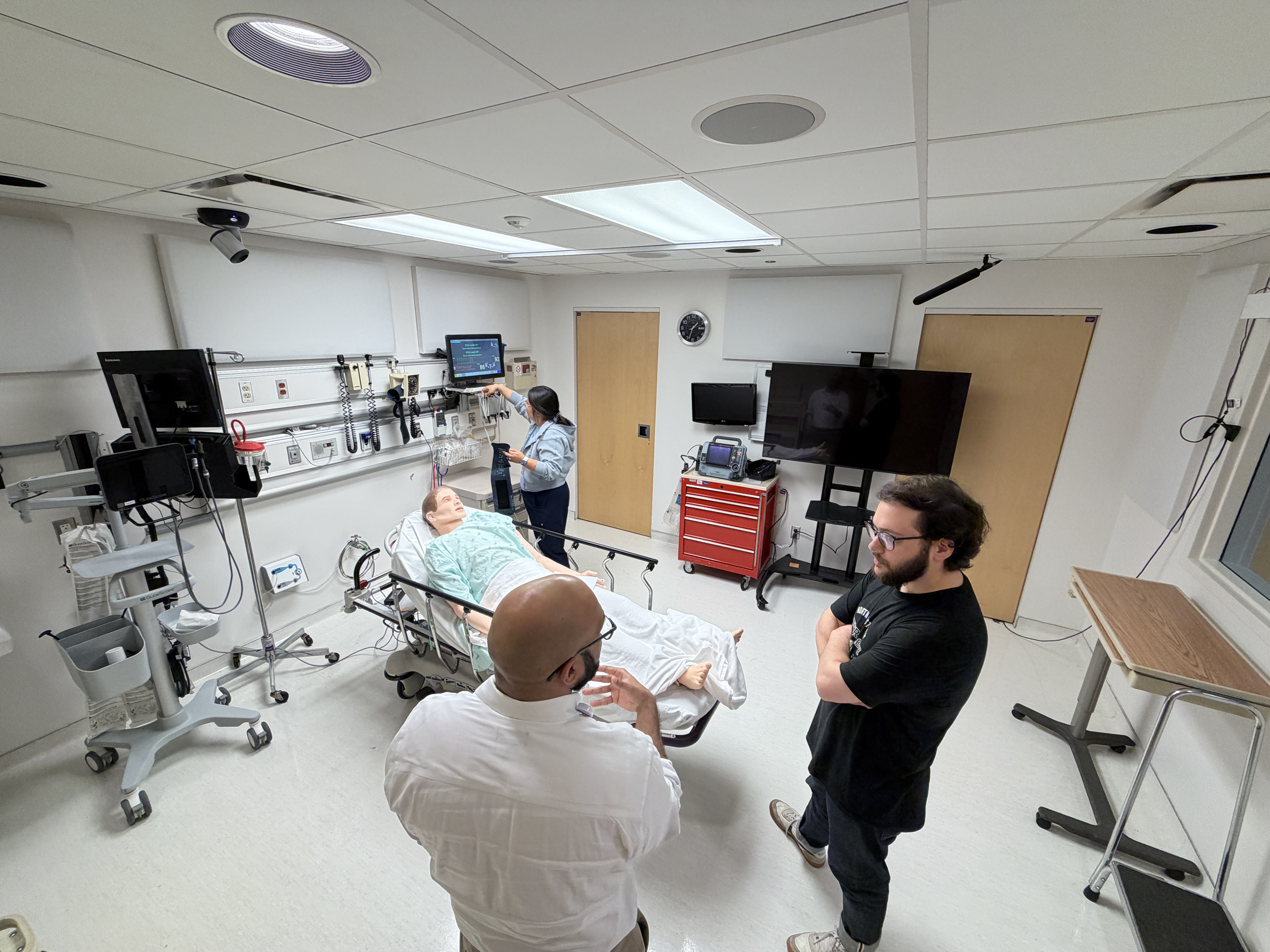
Our residents have multiple opportunities throughout their training to take advantage of Northwestern's Simulation Center. Our PGY-2 bootcamp uses the space for stroke code training and status epilepticus management. We have simulations built into our curriculum for determination of brain death as well as functional neurological disorder assessments. Simulations allow for hands-on training to hone practical skills beyond the bedside. Additionally, our residents receive occipital nerve block and botulinum toxin training in simulated environments.
Business of Medicine
Our business of medicine lecture series prepares residents for practical aspects of a career after residents. Topics include Negotiating a Contract, Academic vs. Private Practice Careers, Navigating a Research Career, Financial Planning, Documentation & Billing and more.