Vascular Neurology Research
Below are the labs and faculty who are advancing our knowledge of neurological vascular disease and stroke prevention, delivery of care and outcomes.
Labs
Ingo LabDr. Ingo's lab researches advanced MRI acquisitions and processing techniques to offer new perspectives on the neural mechanisms underlying stroke, cerebral palsy, and aging.
Research Description
The Ingo Laboratory specializes in advanced MRI acquisitions and processing techniques to offer new perspectives that better explain neural mechanisms underlying stroke, cerebral palsy, and aging. As these endeavors are interdisciplinary in nature, our research in structural MRI methodology combined with cognitive and motor function outcomes are designed to produce cutting-edge imaging markers for these diverse cohorts. The ability to provide new insights and treatments for injury and disease is often dependent on the improved performance of both biomedical hardware and software. Sometimes overlooked, however, are investigations into the underlying mathematical models of biological phenomena that are the basis of the data which a scientist observes. To address this gap, the Ingo Laboratory Research Team is experienced in robustly integrating hardware and software to acquire, process, and statistically analyze biological signals. Furthermore, our team has researched advanced mathematics and physics to more completely characterize biological signals and demonstrated proof of concept in both animal and human studies.
The Ingo Laboratory diffusion MRI (dMRI) protocols are designed not only to characterize the macroscopic properties of brain and muscle tissue, but also to provide new insight into microstructural properties that are quantified in terms of anisotropy and complexity. Our laboratory profiles diffusion properties in biological tissue that reflect the presence of altered cellular heterogeneity as evidence for neural repair and injury in stroke, cerebral palsy, and aging. Our recent data show that anisotropy and complexity were associated with axonal demyelination, altered glial cell counts, and loss of contractile tissue in muscle. Finally, in combination with additional techniques such as task-based fMRI, resting-state functional fMRI, and arterial spin labeling (ASL), the Ingo Laboratory Research Team chronicles the multi-modal radiographic changes in rehabilitation and recovery following acute neural injuries.
Publications
View Carson Ingo, PhD's, publications on his faculty profile.Contact
For more information, contact carson.ingo@northwestern.edu. Skolarus LabOur research program advances stroke prevention, treatment, and recovery through community-engaged, action-oriented science.
Our research program advances stroke prevention, treatment, and recovery through community-engaged, action-oriented science.
Research Description
Our research program advances stroke prevention, treatment, and recovery through community-engaged, action-oriented science. We partner with stroke survivors, caregivers, youth, community organizations, local governments, and health systems in Chicago, Flint, MI and beyond. Together, we connect community, medicine, and science to bring care and research into the places where people live, work, and gather.
Supported by multiple NIH-funded awards, we focus on solutions for blood pressure control and acute stroke treatment to strengthen recovery and long-term well-being, using implementation science frameworks, health services research, and qualitative methods. Each approach is co-created with constituents, ensuring that our interventions are practical, locally tailored, and built to last. Our mission is to close the gap between healthcare and community by developing and testing new ideas to make stroke prevention and recovery more connected, person-centered, and fair.
Projects
Stroke Prevention
The Reach Out and MyBPMyLife trials aim to improve blood pressure control through community- and technology-based approaches. Reach Out provides a tailored SMS text message mobile health program launched in safety-net emergency departments, while MyBPMyLife engages participants in care at FQHCs using a just-in-time adaptive intervention (JITAI) app. Both trials rely on self-reported blood pressure monitoring to support engagement, self-management, and personalized feedback.
Acute Stroke
Stroke Ready was a hospital and community research study in Flint, Michigan, combining implementation science and community-engaged research to improve stroke care. The program included peer-led community workshops to increase stroke preparedness and hospital-based interventions to optimize acute stroke response. In this quasi-experimental study, stroke thrombolysis treatment rates increased over time; suggesting that these strategies can help low resource hospitals provide faster, fairer care for everyone.
Survivorship
UNITE and ACROSS focus on healthy aging and optimizing stroke survivorship. UNITE used a mixed-methods approach to understand the impact establishing an FQHC clinic in a low-income older adult apartments. ACROSS partners with patients and communities to understand and remove barriers that make recovery harder, while tailoring care to fit each person's needs and abilities. The goal is to help stroke survivors feel better and live well after stroke.
Publications
View Dr. Skolarus' publications on her faculty profile.
Contact
Contact Dr. Skolarus at lesli.skolarus@northwestern.edu.
Slutzky LabDr. Slutzky’s lab investigates methods of assisting people with neurologic disorders through brain-machine interfaces.
Dr. Slutzky’s lab investigates methods of assisting people with neurologic disorders through brain-machine interfaces.
Research Description
The goal of our research is to help people with neurologic disorders, especially those who are severely paralyzed from stroke, spinal cord injury, traumatic brain injury, or ALS. Our research centers around using neural prosthetics, i.e., human machine interfaces, to help restore or replace function of the injured nervous system. We have developed a myoelectric interface for neurorehabilitation training (MINT) to help people with stroke regain function in their arms. The MINT uses electrical muscle signals to control a cursor in customized video games. This enables them to improve coordination between the muscles.
Brain-machine interfaces (BMIs) offer the capability to “decode” brain signals and use them to control computer cursors, prosthetic limbs, or haptic feedback devices. We are investigating the possibility of using BMIs to help rehabilitate brain function by driving plasticity. We study this in humans with traumatic brain injury. In addition, we are investigating the potential to decode a person’s intended speech directly from his or her brain and using this to restore communication to people who have lost it due to severe paralysis. We also use this powerful paradigm to study the underlying relationship between different types of brain signals, for example, the relationship between field potentials (summed from many neurons in the network) and action potentials of individual neurons.
Publications
For more information see the faculty profile of Marc W. Slutzky, MD, PhD or the Slutzky Lab website.
Contact Us
Email Marc W. Slutzky, MD, PhD
Phone: 312-503-4653
Sorond LabDr. Sorond's lab studies the neurovascular mechanisms responsible for acute and chronic brain injury.
Dr. Sorond's lab studies the neurovascular mechanisms responsible for acute and chronic brain injury.
Research Description
Our research program is directed at understanding neurovascular function in health and disease. Specifically, we have been studying the association between cerebral blood flow regulation, structural changes in the brain and the clinical outcomes of acute and chronic cerebrovascular injury. In acute neurovascular disorders, we have validated several novel indices of cerebral blood flow regulation which can now be used to predict the development of vasospasm in subarachnoid hemorrhage and hematoma expansion in patients with intraparenchymal hemorrhage. The availability of these early non-invasive biomarkers will have a significant impact on early interventions to improve outcome in patients with subarachnoid and intraparenchymal hemorrhage. Similarly, in chronic neurovascular disorders associated with aging and neurodegeneration, we have been examining the contribution of vascular disease to mobility impairment and cognitive decline. We have shown that our non-invasive biomarkers of vascular function are strongly associated with cerebral small vessel disease as well as motor and cognitive impairment. Our goal is to expand these studies to include other neurological disorders such as stroke, pre-eclampsia, traumatic brain injury and dementia. Having non-invasive, real-time measure of neurovascular function which can predict clinical outcome in the early phases of brain injury will have significant implications on clinical trials and therapeutic targets designed for the treatment and prevention of these various acute and chronic neurovascular injuries.
For more information, view the faculty profile of Farzaneh A. Sorond, MD, PhD. Visit her lab website for more information.
Recent Publications
Research Faculty
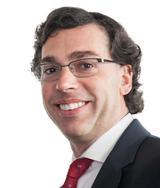
Bernstein, Richard A
Professor, Neurology (Stroke and Vascular Neurology)

Caprio, Fan Z
Associate Professor, Neurology (Stroke and Vascular Neurology)
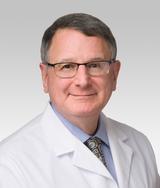
Gorelick, Philip B
Professor, Neurology (Stroke and Vascular Neurology)
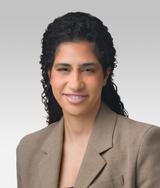
Hassani, Sara
Assistant Professor, Neurology (Stroke and Vascular Neurology)
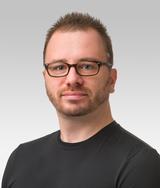
Ingo, Carson
Associate Professor, Physical Therapy and Human Movement Sciences, Neurology (Stroke and Vascular Neurology)
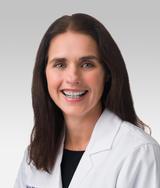
Skolarus, Lesli E
Professor, Neurology (Stroke and Vascular Neurology), Medical Social Sciences (Implementation Science)
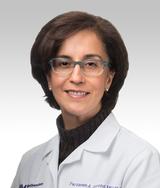
Sorond, Farzaneh A
Professor, Neurology (Stroke and Vascular Neurology), Neurology (Neurocritical Care)
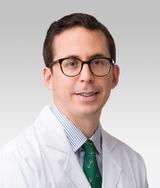
Urday, Sebastian
Assistant Professor, Neurology (Stroke and Vascular Neurology)